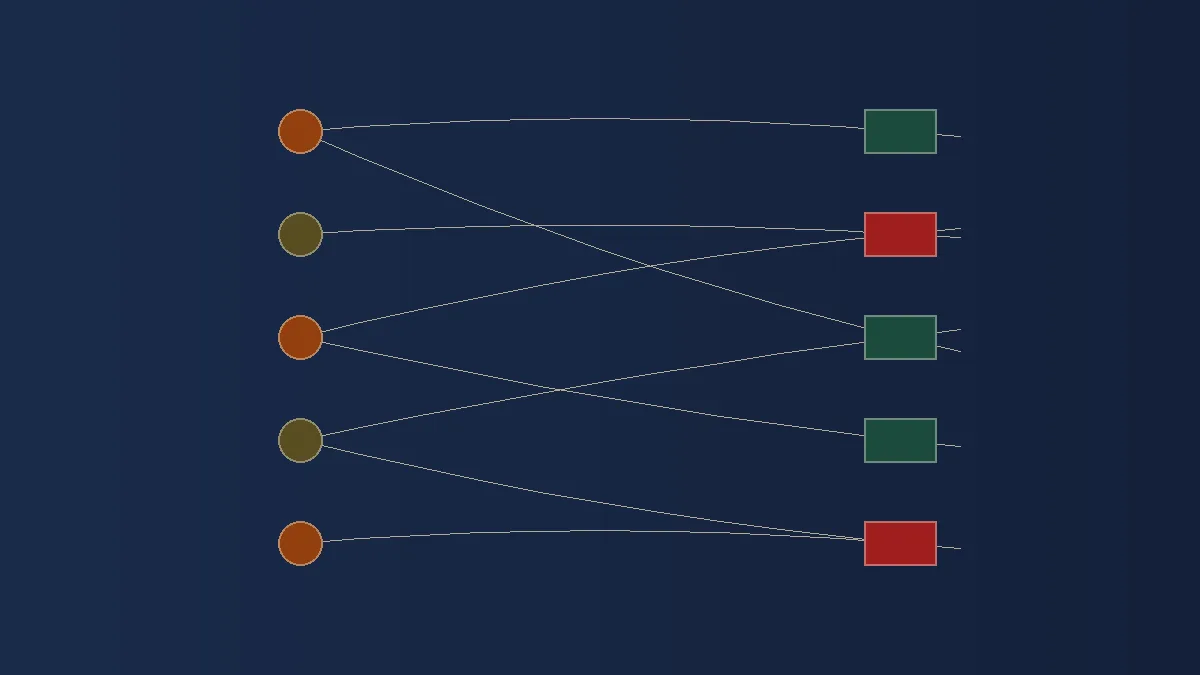
The most common workpaper deficiency we encounter is not an evidence gap. It is a mapping gap: evidence was collected, it arrived on time, it is sitting in the workpaper, and it does not clearly demonstrate what the control objective requires it to demonstrate. A reviewer looking at the workpaper has to do interpretive work to connect the evidence to the objective. In audit terms, that interpretive work belongs in the workpaper itself, not in the reviewer's head.
This happens because control mapping is treated as self-evident rather than as a step that requires explicit documentation. The auditor knows why a particular user access report satisfies an access control objective. The reviewer may not know which access controls the report was meant to support, what population was covered, and what comparison was made. When that logic is not in the workpaper, the review cycle expands to include explanations that should have been written once and referenced forever.
What a Control Objective Actually Requires
Before mapping evidence to a control, it is worth being precise about what the control objective is asking for. A COSO-aligned access control objective for IT general controls might read something like: "Access to production systems is restricted to authorized personnel and reviewed on a periodic basis." That statement contains multiple assertions: access is restricted (point-in-time), access is granted only to authorized personnel (definition of authorization), and restriction is reviewed periodically (frequency and coverage).
A workpaper that supports this objective needs evidence addressing all three assertions. A provisioned user list from the identity provider establishes who has access. An HR terminated employee list or role definition establishes the authorization baseline. A dated review approval establishes that the review occurred and covers the period. A single document addressed to "access review" without specifying the period, the population, and the authorization criteria provides ambiguous support for the objective. An auditor who knows the context can infer the answers. PCAOB AS 1215's documentation standard exists precisely because inferring from context is not a sustainable review model.
The practical consequence is that control mapping requires decomposing the objective into its component assertions and verifying that at least one piece of evidence addresses each assertion. This is more structured than the typical approach of reading a control description and asking "do we have something that looks like evidence for this?" The structured approach surfaces gaps earlier and produces workpapers that are self-explanatory at review time.
The Four Evidence-to-Control Relationship Types
When building a control matrix, it helps to be explicit about the relationship type between each evidence item and the control it supports. There are four common types, and treating them as distinct prevents the mapping confusion that shows up in workpaper reviews.
The first is direct evidence: a document or artifact that directly demonstrates the operation of the control. A signed approval record for a production change directly demonstrates that the change management control operated. An access review sign-off directly demonstrates that the periodic review control operated.
The second is corroborating evidence: an artifact that supports but does not directly demonstrate the control. A system configuration export showing that role-based access controls are in place corroborates an access restriction control but does not by itself demonstrate periodic review. Knowing which evidence is corroborating vs. direct clarifies what else needs to be collected to make the workpaper complete.
The third is population completeness evidence: documentation establishing that the primary evidence covers the complete relevant population. For a user access review, the provisioned user list and the review output need to match. Population completeness evidence is the artifact (usually a system-generated record or a reconciliation) that establishes the match. Missing population completeness evidence is a frequent review comment in workpapers, often because auditors are not thinking of it as a distinct evidence category.
The fourth is negative evidence: documentation of what was not found. For an exception-free control test, the workpaper should not just say "no exceptions noted." It should document what was reviewed and what constituted an exception condition, so the conclusion "no exceptions" is interpretable. Without that framing, "no exceptions" is an assertion without support.
Walkthrough Documentation and the Mapping Record
Walkthrough documentation is the place where control mapping logic is most often missing. A walkthrough is designed to confirm that the control as designed matches the control as operated. The evidence collected during a walkthrough includes observations, inquiries documented in memo form, screenshots, and system outputs. The mapping challenge is connecting these heterogeneous artifacts to the specific control attributes they demonstrate.
One approach that produces clean workpapers is the annotated mapping table: a table in the workpaper that lists each control attribute in one column and the evidence reference in the second column, with a third column for the auditor's conclusion on each attribute. This structure makes the reviewer's job mechanical: check each row, confirm the evidence reference is valid, confirm the conclusion is supported. An audit manager can review a well-constructed mapping table without asking the senior to explain the logic. An audit manager reviewing a folder of documents labeled only by control number has to reconstruct the logic themselves, which is where review cycles extend unnecessarily.
This structure also makes gaps visible before the workpaper is delivered for review. If an attribute row has no evidence reference, the gap is obvious in the structure. If the evidence reference does not support the conclusion, that mismatch is visible in the table. Finding gaps at the structure level, before the workpaper is complete, is materially more efficient than finding them in a review comment cycle.
COBIT vs. COSO: When the Framework Matters for Mapping
Many SOX engagements use COSO 2013 as the primary financial control framework and COBIT as the primary ITGC framework. The mapping challenge when using both is that the same control objective can be described differently across frameworks, and the evidence needed to satisfy the objective varies based on which framework's language the auditor is working from.
This is not a theoretical concern. If a team documents an ITGC access control using COBIT's DSS05 language (protect against internal threats) and the external auditor's program uses COSO component language (control environment), the evidence package may be complete under one framework and appear incomplete under the other. The mitigation is straightforward: when a control maps to both frameworks, the workpaper should note both mappings. The additional line of documentation is worth the saved explanation at review time.
Control mapping at scale across forty or more controls is where manual approaches produce the most inconsistency. Different seniors apply different mapping logic to similar control types. An access control section prepared by one team member may include population completeness evidence that a section prepared by another member omits. Standardizing mapping logic and evidence requirements before fieldwork starts, rather than after workpaper review, is the simplest way to produce a consistent engagement file.
Where Automated Mapping Changes the Equation
We are not saying that manual control mapping is inherently problematic. Experienced auditors who know their control frameworks and their evidence requirements do this well. The argument is about consistency and documentation overhead. When control mapping is done manually by multiple people across a complex engagement, the consistency varies, the documentation of the mapping logic varies, and the review friction compounds accordingly.
When evidence intake includes a step that associates each document with the control it tests based on document content rather than file placement, the mapping is consistent by design. The logic that identified a configuration report as supporting a change management control is the same logic applied to every configuration report across the engagement. The workpaper reflects that logic through the structured evidence-to-control link rather than through an auditor's narrative explanation.
This does not replace the auditor's review of whether the evidence is sufficient. Sufficiency is a judgment call that depends on professional standards, engagement-specific risk assessment, and the specific content of the evidence. What it does replace is the step of deciding which folder a document belongs in and writing an explanation of why it belongs there. For a team managing forty controls across multiple business processes, eliminating that step consistently produces workpapers that are ready for review rather than workpapers that are ready to be assembled for review.